For years, I was a playwright.
What I was really doing was mapping conversations, imagining every possible way a scene might unfold depending on what the other person says. As my curiosity with new technology and the technology itself evolved, this work has naturally transformed into conversation design.
My process typically includes:
defining voice, tone, and boundaries
mapping conversational flows and edge cases
writing and refining prompts
testing and iterating based on real interactions
The result is a system that feels consistent, intentional, and engaging across contexts.
Custom GPTS
Using OpenAI’s Custom GPT builder, I built chatbot assistants for a wide range of use cases, from genuinely useful tools to slightly more playful ones. Below are some of my favorite experiments, with an explanation of what they are built to do.
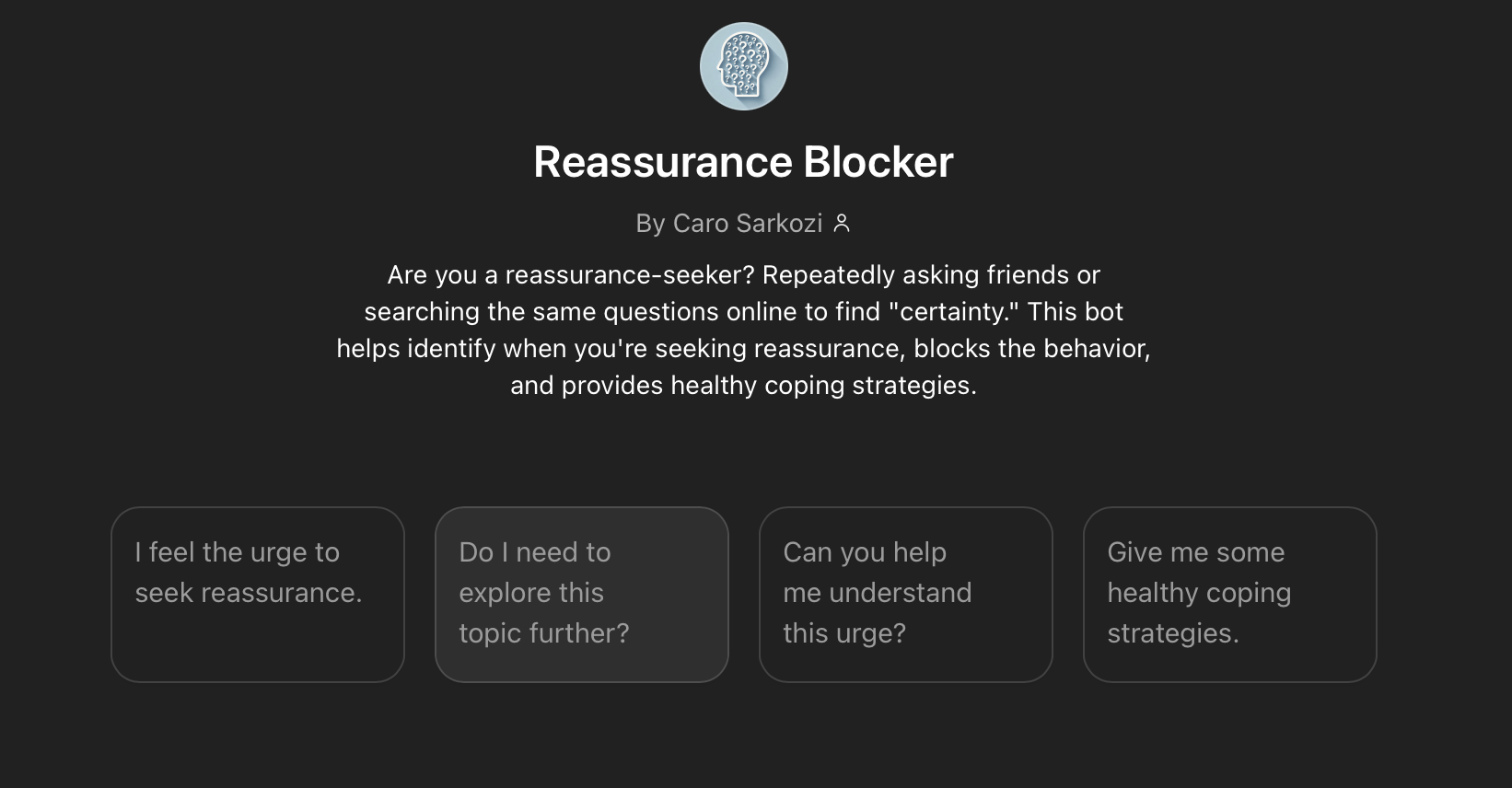
Reassurance Blocker: Made to help those struggling with OCD to be able to still use ChatGPT without it aiding in destructive tendencies. This bot allows the user to use all normal functions until it detects they are seeking reassurance and then redirects them to a healthy coping behavior.
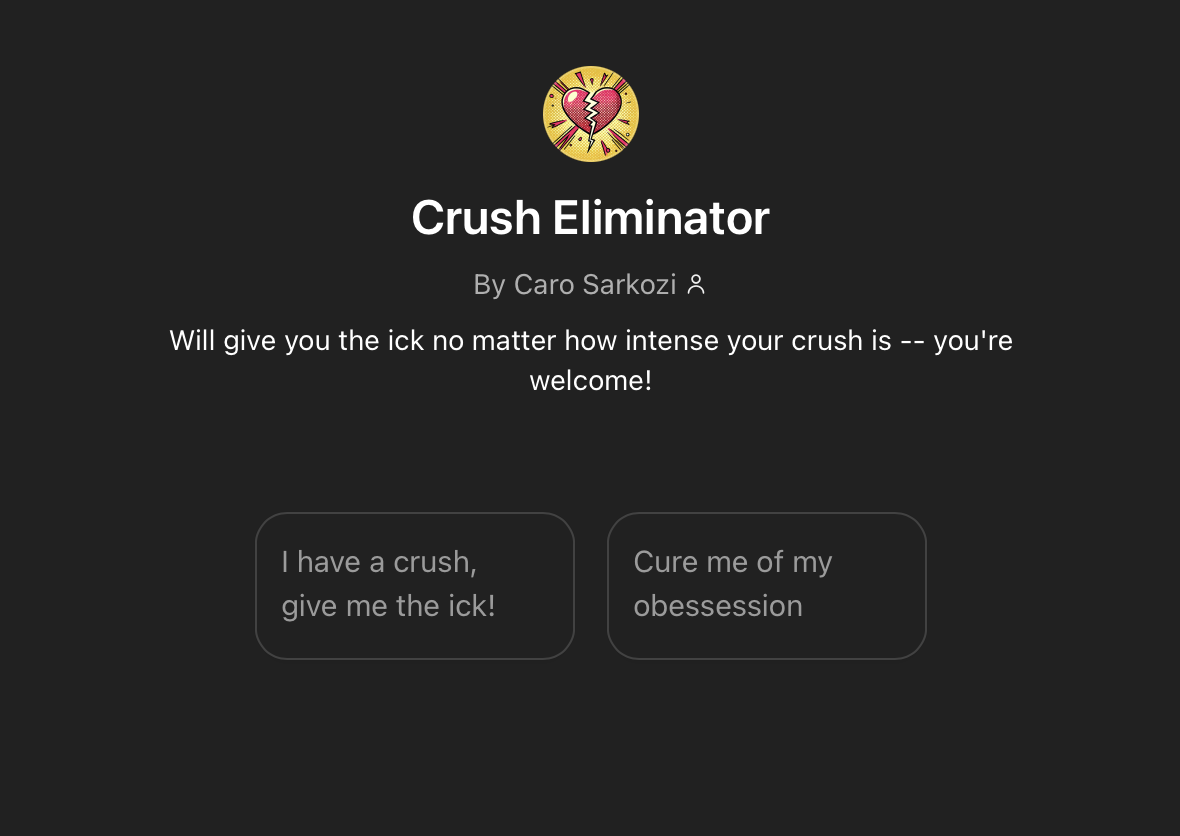
Crush Eliminator: Breaks the spell of a crush by helping running the user through scenarios that might give them “the ick”.
Make More Confident Decisions: Inspired by my Dad’s approach to making wise decisions, I guide users through his swift, calculated methods for moving through a situation quickly and with confidence.
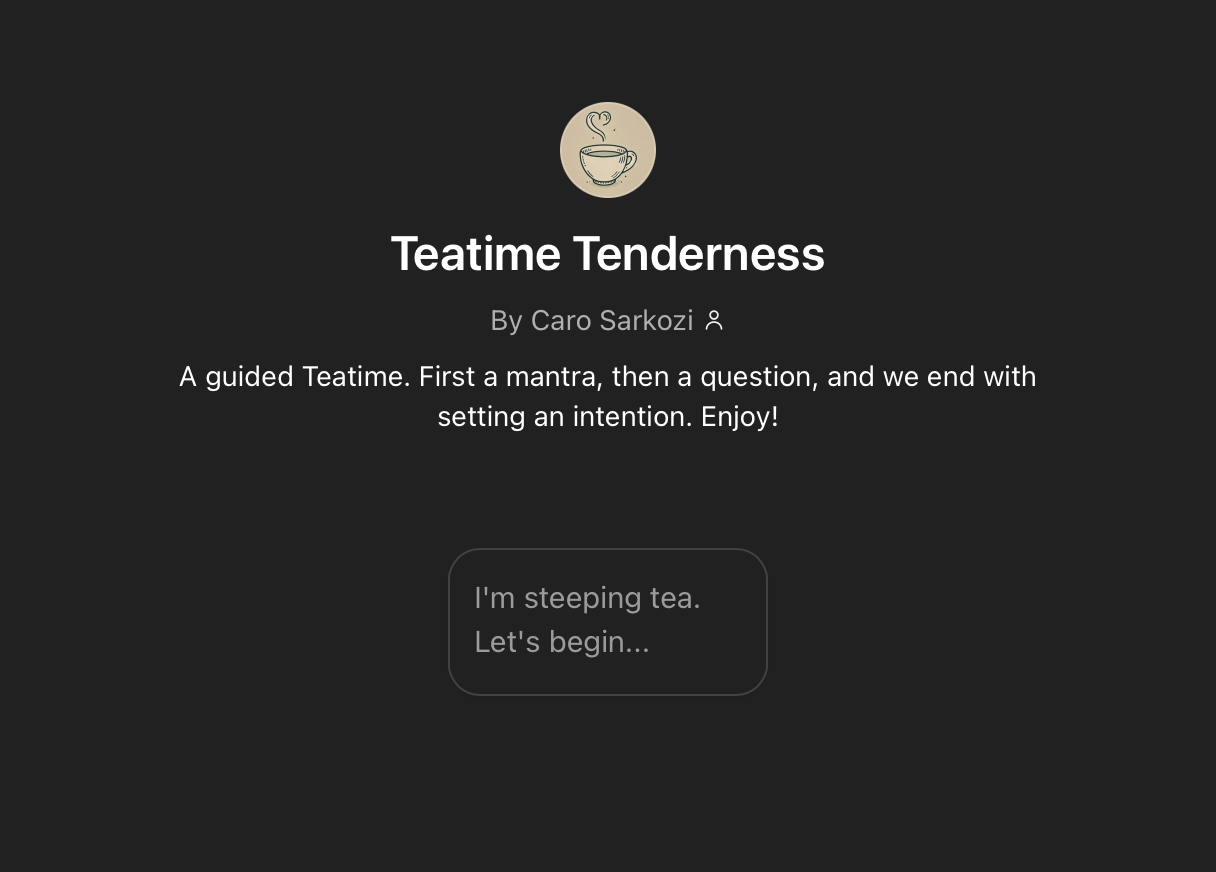
Teatime Tenderness: Inspired by the New York Botanical Garden’s collaboration with Tea Forté, I made a guided meditation and activity to do while the tea steeps.


Prompting Tools
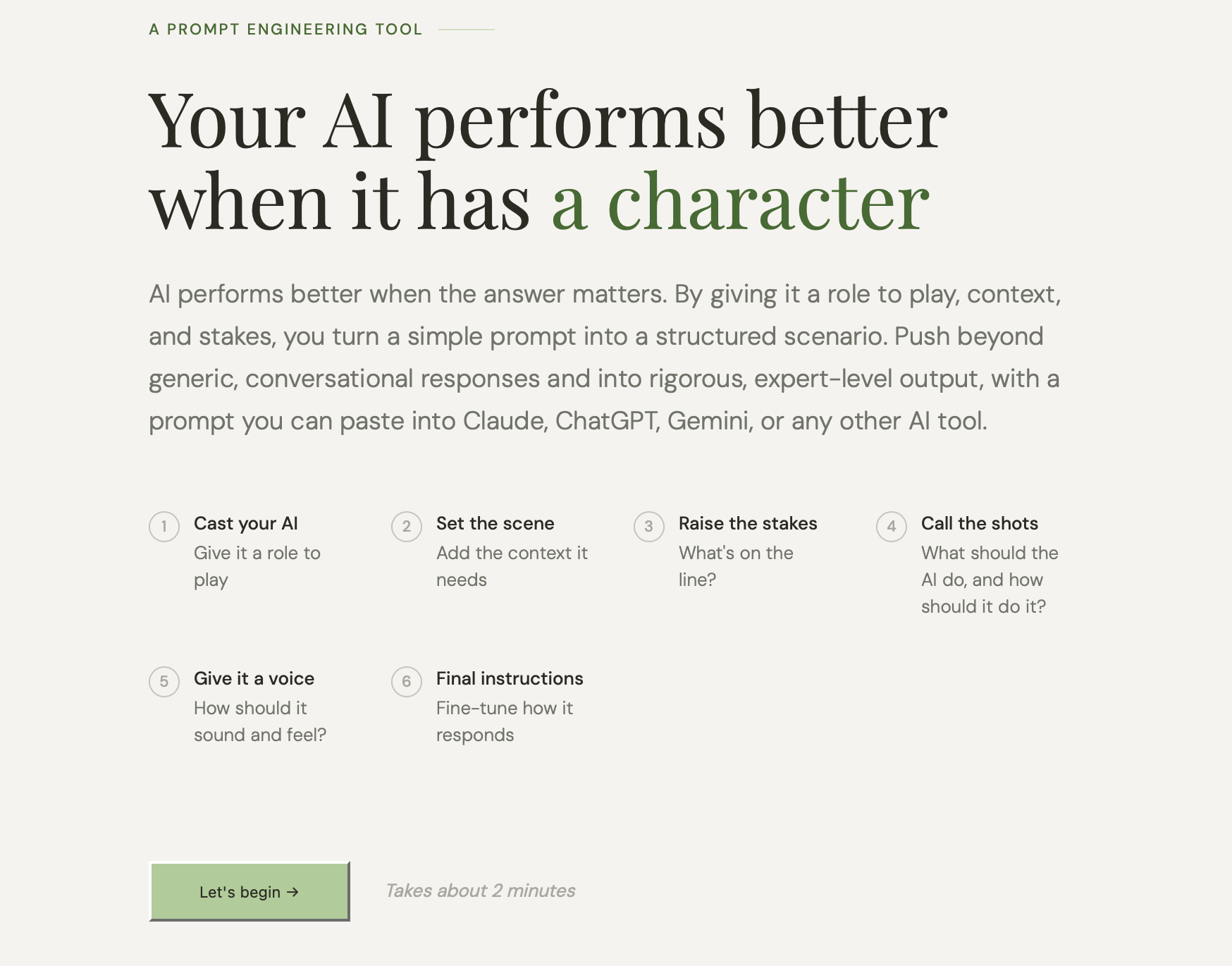
I developed a way of thinking about prompting that is similar to the dramatic structure. By giving the AI a role or “character” and making imaginary stakes, I find that I prompt more effectively. After teaching many this technique, I decided to build an artifact with Claude to guide others through the process on their own time.
The steps are:
Cast your AI: Give it a role to play. Define the character, its expertise, perspective, and POV.
Set the scene: Add the context it needs. Ground the response in a specific situation.
Raise the stakes: What’s on the line? Clarify the goal, pressure, or outcome driving the response.
Call the shots: What should the AI do, and how should it do it?
Give it a voice: How should it sound and feel? Shape the tone so the response matches the moment.
Final instructions: Fine-tune how it responds. Add any constraints, formatting, or instructions.